


If you love football, you know that the final score only tells part of the story. Sometimes the real action happens in the numbers—yards gained, tackles made, and touchdowns scored. That’s exactly what happened in the 2025 Chicago Bears vs Bengals matchup.
This game wasn’t just high-scoring; it was a chess match of strategy, speed, and stamina. The Bears leaned on a strong running game and smart clock management, while the Bengals pushed the ball downfield with fast, explosive passes. Every player’s performance mattered, and looking at the stats reveals who really controlled the game.
In this article, we’ll break down the Chicago Bears vs Bengals match player stats. You’ll see how quarterbacks, running backs, receivers, and even special teams shaped the outcome. By the end, you’ll understand the game from a fan’s view and an analyst’s perspective—and maybe even pick up a few fantasy football insights along the way.
Game Overview: High-Scoring Showdown
The 2025 matchup between the Chicago Bears and Cincinnati Bengals was one of the most exciting games of the season. Right from the opening kickoff, it was clear this wouldn’t be a typical NFL contest. Fans witnessed a back-and-forth battle that ended 47-42 in favor of the Bears, with both teams showing bursts of offensive brilliance. If you only looked at the score, you might think it was all about long passes and highlight-reel plays—but the story was much deeper.
Chicago and Cincinnati brought two very different styles to the field. The Bears leaned on a strong running game and balanced play-calling. They focused on moving the chains steadily, controlling the clock, and wearing down the opposing defense. Each drive was methodical, like a chess player thinking several moves ahead. The Bengals, by contrast, relied heavily on vertical passing and speed. They were constantly looking for explosive plays to rack up yards quickly, putting pressure on the Bears to respond.
Early in the game, the Bengals electrified the stadium with a 98-yard kickoff return touchdown, instantly setting a high-energy tone. But Chicago didn’t panic. Instead, they responded with several long, time-consuming drives that gradually shifted momentum. By the fourth quarter, it wasn’t just about who could make the flashiest plays—it was about who could control the clock, make smart decisions, and capitalize on key mistakes.
Practical takeaway: Looking at stats gives you a deeper understanding of a game. They show not just who scored or made flashy plays, but who actually controlled the tempo and executed a strategy. In this matchup, Chicago’s balance versus Cincinnati’s aggressive passing style shaped the outcome more than any single highlight play.
Quarterback Battle: Who Led the Offense?
Caleb Williams (Chicago Bears)

Caleb Williams played like a seasoned veteran, even though he’s still young. He completed 24 of 32 passes for 280 yards and threw three touchdowns without any interceptions. Those numbers may not leap off the page compared to Joe Flacco’s 470 passing yards, but what Williams did really mattered: he controlled the game, protected the football, and made sure every completion contributed to the Bears’ rhythm.
A standout moment came late in the fourth quarter. With the game on the line, Williams orchestrated a long, methodical drive. Each pass was precise, each decision calculated, and he avoided forcing throws into tight coverage. By the time the Bears reached the red zone, he had eaten up valuable minutes off the clock, keeping Cincinnati’s offense sidelined. In real life, this is like driving carefully through a busy city street—you may not make a dramatic sprint, but you arrive safely and on time.
Williams’ performance shows the power of efficiency over pure volume. Instead of chasing big numbers, he prioritized completing passes that maintained momentum and kept the defense guessing. For young quarterbacks, this is a lesson in patience and smart decision-making. You don’t need to throw bombs every play to win; sometimes, consistent, controlled play is enough to tip the scales in a close matchup.
Joe Flacco (Cincinnati Bengals)
Joe Flacco delivered a statistical masterpiece, completing 36 of 55 passes for 470 yards and four touchdowns. Watching him throw was like watching a sprinter in full stride: every pass had the potential to instantly change the game. His ability to stretch the field vertically put constant pressure on the Bears’ defense, forcing them to defend deep while still being aware of the ground game.
But there’s a trade-off with such high-volume passing. The Bengals spent less time holding the ball, giving Chicago more chances to control possession with their running attack. Flacco also threw two interceptions, and even small mistakes like that can be decisive in a high-stakes game. Think of it like sprinting a marathon: you can cover huge ground quickly, but you risk running out of energy and making mistakes if you don’t pace yourself.
Despite these risks, Flacco’s performance highlights the impact of an aggressive, high-yardage quarterback. The Bengals scored multiple quick touchdowns and kept the game close, demonstrating how explosive passing can maintain hope in tight contests. But the final score shows that yardage alone isn’t enough—game management and balance matter just as much.
Key Takeaway from the QB Duel
The quarterback duel in this game illustrates a fundamental football lesson: controlling the clock is as important as racking up yards. Chicago’s balanced approach—efficient passing and a strong rushing attack—allowed them to withstand Cincinnati’s explosive plays and maintain composure in high-pressure situations.
Even though Flacco threw for nearly 500 yards, the Bears’ time-consuming drives and smart third-down plays ensured that the Bengals never fully dominated possession. This game shows that in football, strategy often beats sheer athleticism. A quarterback who manages the game well, protects the ball, and executes plays in sync with the running game can be more valuable than one who simply piles up yards.
How Chicago’s Running Game Controlled the Match

Chicago’s running game was the unsung hero of this matchup. While many fans were watching the deep passes fly across the field, the Bears were quietly grinding out yards on the ground. They finished with 283 rushing yards, compared to just 46 for Cincinnati. Running the ball effectively isn’t just about piling up yards—it’s about controlling the clock, wearing down defenders, and opening up opportunities for the passing game later. Think of it like slowly heating water on a stove: it doesn’t look exciting at first, but eventually, it reaches the point that wins the day.
Kyle Monangai led the charge for Chicago. He carried the ball 26 times and gained 176 yards, averaging nearly seven yards per attempt. He broke tackles, pushed through defenders, and kept drives alive. In several instances, his runs consumed valuable minutes in the fourth quarter, forcing Cincinnati’s high-powered offense to stay on the sideline. This approach not only kept the Bears’ defense rested but also made it harder for the Bengals to mount a comeback. Monangai’s performance shows how a strong running back can dictate the pace of a game, making the entire offense more effective.
On the other side, the Bengals struggled to establish any ground game. Their few rushing attempts rarely gained momentum, leaving them exposed to Chicago’s balanced attack. Without a credible running threat, Cincinnati’s offense became one-dimensional, relying heavily on the passing game, which increased the risk of mistakes and turnovers. This contrast highlights why even in today’s pass-heavy NFL, teams that can control the ground game often win the closest contests.
Receiving Highlights: Explosive Plays and Crucial Catches
Wide Receivers
Cincinnati’s receivers were nothing short of spectacular. Tee Higgins and Ja’Marr Chase kept the Bengals competitive with multiple explosive plays. Higgins caught 9 passes for 121 yards and two touchdowns, showing both speed and precision in his routes. Chase added 111 yards on 7 catches, including a long reception that almost shifted momentum entirely in Cincinnati’s favor. Their chemistry with quarterback Joe Flacco allowed Cincinnati to score quickly and remain in the game, even while struggling on the ground. Watching these two in action is like seeing a tag team in a relay race—they constantly stretch the field and force defenders to cover every inch.
For the Bears, D.J. Moore played the steady, reliable role every team needs. He grabbed 6 passes for 72 yards, including a touchdown on a creative rushing-style play. Moore helped sustain drives and provided consistent options for Caleb Williams. His contributions highlight how dependable receivers aren’t always the ones scoring highlight-reel touchdowns—they’re the ones keeping chains moving and ensuring the offense functions smoothly.
Tight Ends
Colston Loveland became Chicago’s game-changer. The rookie tight end caught six passes for 118 yards and two touchdowns, including the game-winning reception in the final 17 seconds. Tight ends like Loveland are valuable because they operate in the middle of the field, exploiting defensive gaps and creating mismatches with linebackers. His ability to block on the run and slip into open zones gave Chicago a secret weapon that Cincinnati’s defense couldn’t fully account for.
Loveland’s performance shows why tight ends can be pivotal in close games. While quarterbacks and wide receivers often grab the headlines, a skilled tight end can turn routine plays into scoring opportunities, especially in crunch time. His final touchdown wasn’t just a highlight; it was the culmination of disciplined route running, timing with the quarterback, and smart exploitation of defensive tendencies.
Defensive Plays That Shifted Momentum
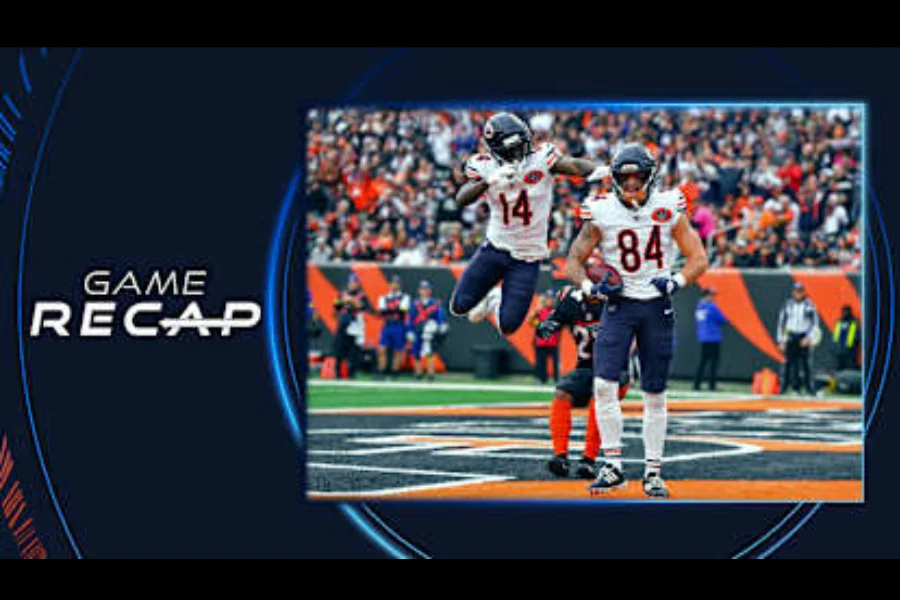
Even in a game with nearly 90 points scored, defense played a crucial role in deciding the outcome. Chicago forced three turnovers, two of which came at pivotal moments in the fourth quarter. Linebacker Tremaine Edmunds intercepted a screen pass by Joe Flacco, immediately halting a promising Bengals drive. Later, cornerback Nahshon Wright stepped in front of a pass, giving the Bears both possession and momentum in a tense stretch. These interceptions weren’t just stats—they directly set up scoring opportunities and helped Chicago maintain control in the closing minutes.
Sacks and pressure also influenced the game, even though Cincinnati racked up significant yardage. When defenders broke through the line, Flacco was forced to release the ball earlier than he wanted, reducing the effectiveness of deep throws and limiting explosive plays. In practical terms, think of it like trying to complete a delicate task while someone keeps tapping your shoulder—it’s harder to perform at full capacity.
Even in high-scoring contests, well-timed defensive plays can swing momentum. Chicago’s defense didn’t need to dominate the scoreboard—they needed to make critical stops and capitalize on mistakes. This strategy paid off, especially in the final quarter when possession and clock management became as important as yardage.
Special Teams, Penalties, and Game Management
Special teams often go unnoticed, but in this matchup, they were decisive. Cincinnati electrified fans early with a 98-yard kickoff return touchdown by Charlie Jones, setting an explosive tone. Yet Chicago responded with consistent punting and accurate kicking that pinned the Bengals deep in their own territory multiple times. A blocked field goal further shifted momentum, proving that small plays outside the main offense can have big effects.
Penalties also played a pivotal role. Chicago kept their focus, committing only four penalties for 35 yards. Cincinnati, however, gave up eight penalties totaling 75 yards, including holding calls that wiped out significant plays. These mental mistakes cost them valuable field position and forced longer drives, making it harder to keep up with the Bears’ methodical pacing.
Third-down efficiency highlighted the difference in execution. Chicago converted 8 of 12 third-down attempts, sustaining drives and keeping their defense rested. Cincinnati converted only 5 of 13, struggling to maintain possession and momentum. In football, converting on third down is like keeping a car moving in traffic—it’s what keeps the team in rhythm and prevents the other team from gaining control.
Fantasy Football Implications
For fantasy football players, this matchup was a goldmine. Joe Flacco threw for 470 yards and four touchdowns, making him a top scorer for fantasy managers. Running back Kyle Monangai delivered 176 yards on the ground with zero fumbles, combining high efficiency with big scoring potential. Wide receivers Tee Higgins and Ja’Marr Chase added multiple touchdowns, while Colston Loveland’s game-winning tight end performance rewarded managers who took a chance on a rookie.
The game highlights a key fantasy lesson: balance is crucial. A running back who can control the clock and produce yardage can be as valuable as a wide receiver piling up points in a single explosive play. Tight ends who thrive in high-pressure situations can also provide unexpected fantasy points, especially in games with late-game scoring opportunities.
Additionally, turnovers and game context should factor into lineup decisions. Players who benefit from extended possessions or high-scoring matchups often deliver more consistent points. For instance, Monangai’s dominance in the fourth quarter ensured his fantasy owners gained value even while the Bengals were scoring quickly.
Key Takeaways and Lessons Learned
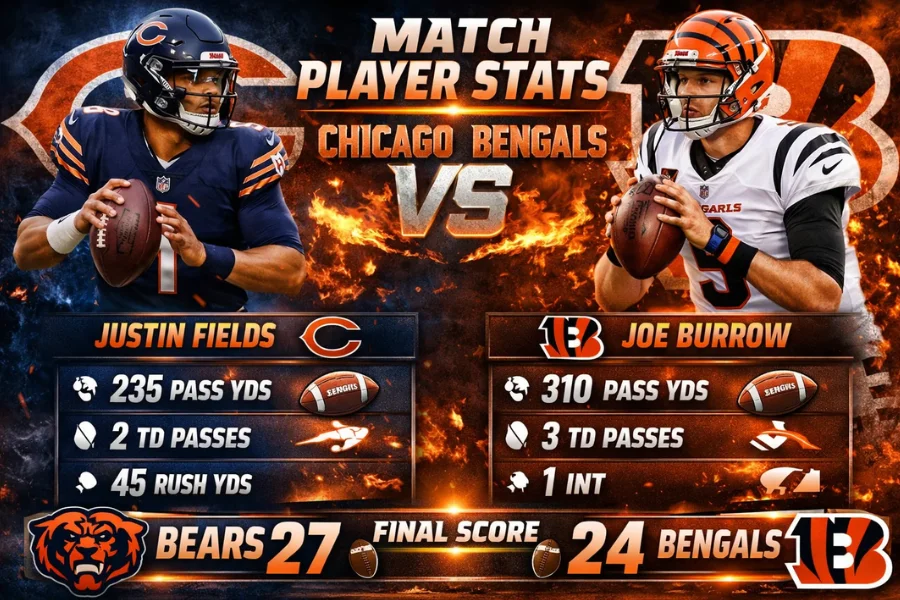
Looking at the Chicago Bears vs Bengals match player stats, several clear lessons emerge. First, balance wins games. Chicago combined a strong rushing attack with efficient passing, controlling the clock and keeping the Bengals’ offense off the field. Second, turnovers matter more than raw yardage. Cincinnati’s two interceptions late in the fourth quarter were decisive, showing that a mistake at the wrong moment can outweigh massive statistical performances.
Reliable targets in critical situations are another takeaway. Colston Loveland’s ability to make tough catches in key moments highlights how having dependable players at tight end or receiver positions can swing close contests. Game management, penalties, and third-down conversions also proved crucial. Chicago’s discipline—few penalties, efficient third-down conversions, and smart clock management—kept them in control throughout the game.
In football, the team that executes smartly often beats the team with flashier stats. Yardage totals are impressive, but they don’t always tell the full story. Chicago’s strategic balance, disciplined execution, and timely plays on offense, defense, and special teams ultimately earned them the victory.
Final Words
The 2025 Chicago Bears vs Bengals game wasn’t just high-scoring—it was a battle of strategy and execution. The Bears leaned on a strong running game and smart clock management, while the Bengals relied on fast, deep passes. Caleb Williams’ efficient quarterback play and Kyle Monangai’s 176 rushing yards helped Chicago control possession, wear down the defense, and keep Cincinnati off the field. Meanwhile, Joe Flacco threw for 470 yards and four touchdowns, keeping the Bengals competitive, but high-volume passing couldn’t overcome turnovers and limited clock control. Wide receivers Tee Higgins, Ja’Marr Chase, and D.J. Moore made key plays, while Colston Loveland’s clutch catches, including the game-winner, highlighted the value of a reliable tight end. Chicago’s defense created crucial stops, and disciplined special teams and few penalties further tilted the game. For fantasy managers, balanced scoring and efficiency proved just as valuable as flashy stats. Ultimately, this matchup showed that in football, smart strategy often beats sheer athleticism.
IQ Writers helps you turn ideas into words that connect, inform, and inspire.